
Blogs
Do Anti Static Sleeves Really Work?


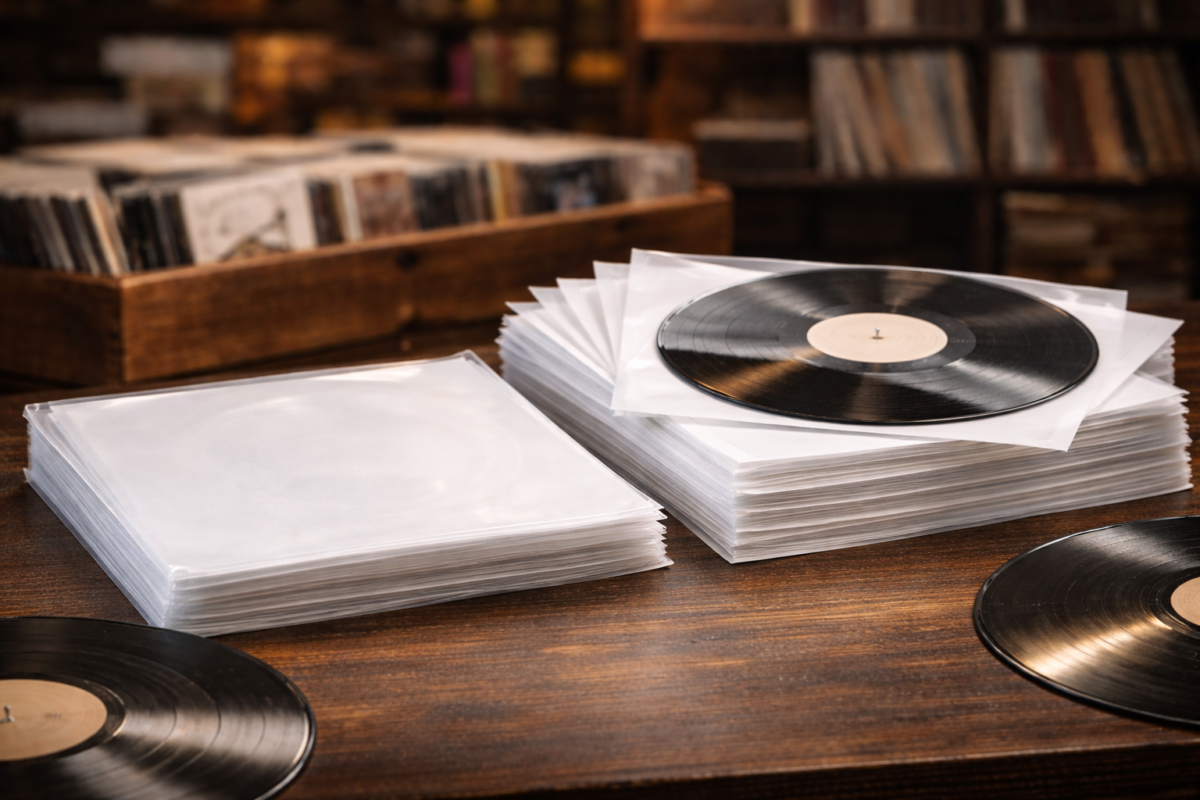
Yes, anti static sleeves work by reducing static electricity on vinyl records, which helps prevent dust buildup, surface noise, and micro-scratches. High-quality anti static inner sleeves made from HDPE and rice paper materials generate less friction than paper sleeves and dissipate static more effectively. While they do not eliminate static completely, they significantly improve vinyl cleanliness and long-term record protection.
Why Static Is a Serious Issue for Vinyl Records
Static electricity is not just a minor annoyance. It directly affects playback quality and long-term preservation.
When a vinyl record builds static charge, it attracts airborne dust particles. Those particles settle into the grooves. Once the needle passes through, the result is:
- Pops
- Crackles
- Surface noise
- Groove wear over time
Static also makes records harder to clean because dust reattaches quickly after brushing.
Collectors often mistake static noise for permanent damage. In many cases, it is simply dust attracted by electrical charge.
Anti static inner sleeves reduce the amount of charge generated during storage and handling. That alone can dramatically reduce dust accumulation over time.
What Actually Causes Static on Vinyl?
Static electricity builds from friction. Vinyl records are plastic. Paper sleeves are abrasive compared to polyethylene.
Here are the most common causes:
1. Sliding Records in and Out of Paper Sleeves
Traditional paper inner sleeves create friction against the record surface. Friction generates static.
2. Low Humidity Environments
Dry air increases static buildup. Winter months are often worse.
3. Synthetic Surfaces
Carpets, clothing, and furniture can contribute to charge transfer.
4. Temperature Changes
Rapid temperature shifts increase static generation.
Static is physics, not superstition.
How Anti Static Inner Sleeves Work
Anti static sleeves work in two key ways:
Reduced Friction
HDPE (High-Density Polyethylene) is smoother than paper. Less friction during insertion and removal means less static generation.
Charge Dissipation
Rice paper layers help disperse electrical charge rather than trapping it against the record surface.
They do not “ground” the record, but they reduce how much charge remains.
The result is:
- Less dust attraction
- Cleaner grooves
- Fewer static pops during playback
Paper Sleeves vs Anti Static Sleeves
Here is a direct comparison:
| Feature | Standard Paper Sleeve | Anti Static Inner Sleeve |
|---|---|---|
| Static buildup | High | Low |
| Dust attraction | Frequent | Reduced |
| Groove contamination | Common | Less frequent |
| Surface scuffing | Moderate risk | Low risk |
| Archival storage | Basic | Collector-grade |
Over a week, you may not notice much difference. Over years, the difference becomes obvious.
Do Anti Static Sleeves Improve Sound Quality?
They do not change the sound of a clean record.
What they do is reduce the causes of noise:
- Dust in grooves
- Static discharge pops
- Debris accumulation
The improvement comes indirectly through better cleanliness.
Collectors who switch often report:
- Fewer pops after cleaning
- Less dust visible on playback
- Reduced need for repeated brushing
The sound improvement is maintenance-based, not magical.
Are Anti Static Sleeves Necessary for Every Collector?
Not necessarily.
They matter most if:
- You own valuable or rare pressings
- You store records long term
- You live in a dry climate
- You frequently play your records
- You want to maintain resale value
For casual listeners with small collections, paper sleeves may seem fine. For serious collectors, anti static sleeves are standard practice.
When Anti Static Sleeves Matter Most
Dry Climates
Low humidity dramatically increases static buildup.
Large Collections
The bigger your collection, the more dust management matters.
Frequent Handling
More friction means more static.
Long-Term Storage
Archival protection reduces gradual degradation.
Static is cumulative. Prevention is easier than correction.
Are All Anti Static Sleeves the Same?
No.
There are major differences in material quality.
Look for:
- HDPE lining
- Rice paper center layer
- Archival-safe materials
- Proper 12-inch LP sizing
Avoid cheap PVC sleeves. PVC can cause long-term chemical damage to vinyl.
Material quality determines whether the sleeve truly protects your records or simply looks similar.
Do Anti Static Sleeves Replace Record Cleaning?
No.
They reduce dust attraction but do not remove existing debris.
A proper vinyl maintenance routine includes:
- Carbon fiber brushing before playback
- Occasional deep cleaning
- Clean hands when handling
- Proper vertical storage
Think of anti static sleeves as prevention, not repair.
Inner Sleeves vs Outer Sleeves: Different Jobs
Anti static inner sleeves protect the record itself.
Outer sleeves protect:
- Album artwork
- Jacket corners
- Spine integrity
- Surface gloss
For full protection, most collectors use both.
Step-by-Step: How to Upgrade to Anti Static Sleeves
Step 1: Remove Record Carefully
Take the vinyl out of the old paper sleeve.
Step 2: Clean the Record
Brush or clean to remove existing dust.
Step 3: Insert Into Anti Static Sleeve
Slide the record gently into the new inner sleeve.
Step 4: Store Vertically
Place inside the jacket and outer sleeve.
Consistency is more important than perfection.
The Key Takeaway
Anti static sleeves are not marketing hype. They reduce friction, lower static buildup, minimize dust attraction, and support long-term vinyl preservation.
They do not eliminate static entirely. They do not replace cleaning. But they significantly improve storage conditions compared to standard paper sleeves.
For collectors who value longevity, they are one of the simplest and most effective upgrades available.